Can't Stop Picturing Her Cheating? How to Switch Off the Mental Movie
The images feel like they're showing you the truth. Mostly they're your mind filling gaps, and the more you feed it details, the more vivid the film gets.

Video version: When you can't stop picturing it
Coming soon. Everything in the video is in the written guide below.
If you can't stop picturing her cheating, you're not going mad. Shock makes vivid, repeating images, and every new detail you learn adds to the film. You stop it in two parts: a detail ban, so the movie stops getting new scenes, and a two-minute switch to a task your brain can't run alongside the images.
"I found out she cheated, and I can't stop picturing it."
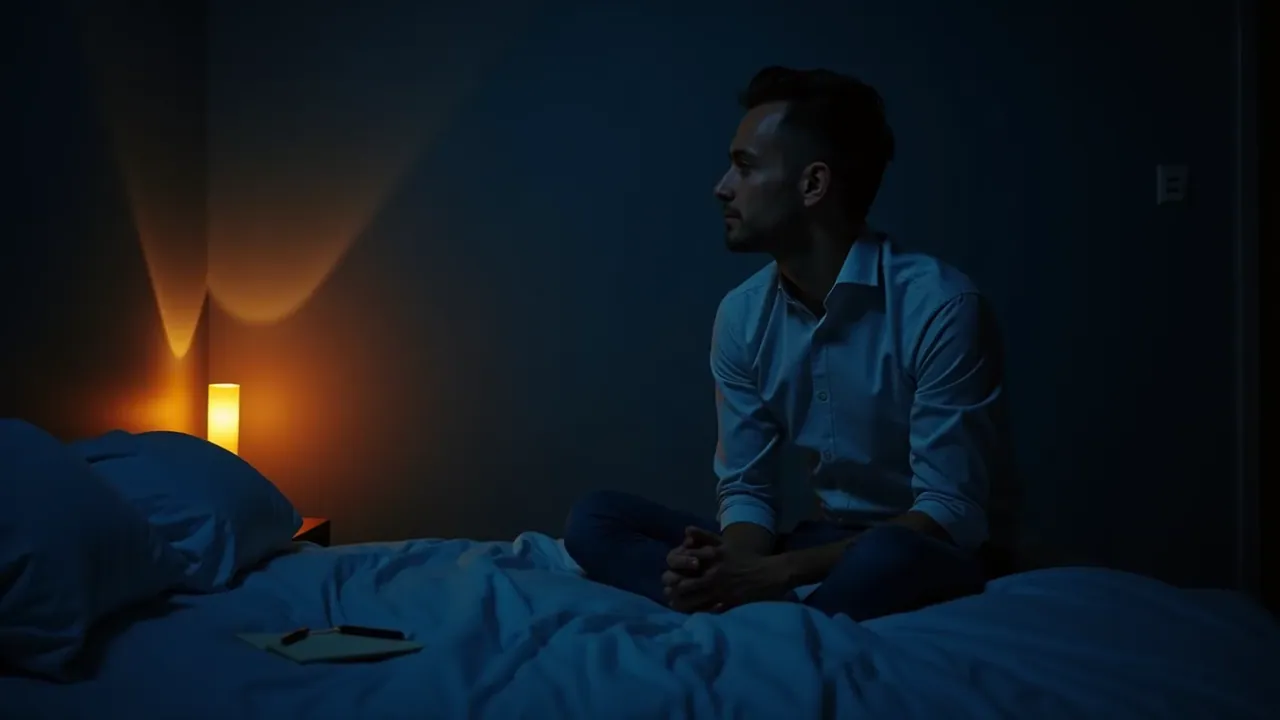
It's worst at night, and whenever something reminds you of the other man: his name on a screen, a car like his, a gym you know he uses. The movie starts and you're watching it before you've chosen anything.
You stop chasing details, and you can interrupt the mental movie within a couple of minutes when it starts, so it plays less often and less vividly.
Why the images keep looping
When something shocking happens, your mind treats it like a threat to understand. It keeps going back to it, trying to see it clearly, so you'll be ready next time.
But you weren't there. So your mind does what minds do: it fills the gaps. It builds scenes from fragments, a hotel name, a text you saw, a date. Those imagined scenes are often more vivid and worse than the reality.
Then, every time you learn a new detail, the film gets an upgrade. A new location. A new line of dialogue. That's why the questions feel urgent and the answers make it worse.
The pillar guide on how to get over being cheated on covers the first 72 hours, anger and self-worth. This post takes one problem from it, the intrusive images, and gives you a nightly and daytime routine for them.
When you can't stop picturing her cheating: the two-part fix
- Write the short list of facts you genuinely need for decisions, and get only those.
- Declare a detail ban on everything else, and tell the people who might offer details.
- Label the movie when it starts: "Film. Not facts."
- Switch to a demanding task for two minutes, such as counting back from 300 in sevens.
- Move your body and change room, or put cold water on your face.
- Note the trigger afterwards, so you can mute or avoid it for now.
Part one: the detail ban
The facts you might need are few. Is it still going on? Do you need a health check? What happens with the flat, the bills, your belongings? Those affect decisions. Get them, calmly, once.
Everything else, where, how often, what was said, what he's like, goes under the ban. Before any question, ask: "Will knowing this change a single decision?" If not, it's material for the film.
Part two: switching the channel
Your brain struggles to hold a vivid image and a hard mental task at once. Counting back from 300 in sevens, naming a footballer for every letter of the alphabet, or reciting the steps of a job you know well all take up the same space the images use.
Two minutes is usually enough to break the scene. Then move: stand up, walk to another room, run cold water over your wrists or splash your face. The physical jolt helps the switch hold.
The night version
Nights are hardest because there's nothing else to look at. Keep a card by the bed with the steps written on it. If the movie starts and you can't break it within about twenty minutes, get up, go to another room with low light, and do something dull until you're sleepy. Our guide to waking up at 3am after a breakup has a full plan for those hours.
The words to use when someone offers details
Friends sometimes think they're helping by telling you what they've heard. She might want to "explain everything". Have a line ready.
To friends: "I appreciate you looking out for me. I don't want to know any more details, so please don't pass anything on."
To her, if she wants to explain: "I have what I need to know. I don't want the details. Please don't send them."
To yourself, when you're tempted to dig: "Would this change a decision? No. Then it's just another scene."
Marco and the hotel name
Marco, 33, is a sous-chef in London. He found out his girlfriend of four years had been seeing a colleague for months. For three weeks he asked her and two mutual friends for more details. Each answer, a hotel name, a weekend away, a gift, became a new scene at 2 a.m. He wrote his short list of needed facts and declared a detail ban. He muted the colleague's name on every app. When the movie started, he counted back in sevens and went to the kitchen for cold water. In week one he did it most nights. By week four the images still came, but they were blurrier and he broke them in a minute or two.
The other man is a trigger, not a target
A lot of the images feature the other man. Many men find themselves looking him up, comparing, checking his profiles. Each look gives the film a sharper cast.
Treat him like any trigger. Mute or block his name, his accounts and anywhere he's likely to appear. Don't confront him; it rarely helps and can make things far worse. If you need somewhere for the anger, write it out in an angry letter to your ex that you never send, or burn it off in a hard training session.
The free No-Contact Survival Kit walks you through muting every back door in about 15 minutes.
Mistakes that keep the movie playing
- Chasing "just one more" detail. Every answer adds a scene. Hold the ban, even when the urge is strong.
- Fighting the image head-on. Telling yourself "don't picture it" makes it sharper. Label it and switch channel instead.
- Looking him up. It gives your mind a face, a car and a home to use. Mute him everywhere.
- Drinking to stop the images. Alcohol often makes nights worse and lowers your guard against digging for details.
- Taking the images as a measure of your worth. They show what your mind is doing with shock, not what you're worth. That's covered in the pillar guide on intrusive images and self-worth.
For sudden thoughts during the day rather than full scenes, the quick reset in intrusive thoughts about your ex also works.
- You have your short list of needed facts and have stopped asking for more.
- People around you know about the detail ban and respect it.
- When the movie starts, you break it within a few minutes most times.
- The images are less frequent or less vivid than two weeks ago.
- If they're as intense after a month, or your sleep is wrecked most nights, book a doctor or therapist; this is exactly what they help with.
This article is educational, not therapy. If you have any thoughts of harming yourself or anyone else, call or text 988 in the US (or Samaritans on 116 123 in the UK and Ireland), or contact your local crisis line or emergency services now. If a relationship involved threats, control or violence, contact a domestic abuse helpline or emergency services; in the US, the National Domestic Violence Hotline (call 1-800-799-7233 or text START to 88788; in the UK, the National Domestic Abuse Helpline on 0808 2000 247 or the Men's Advice Line on 0808 801 0327) supports men too.
Key takeaways
- The images are your mind filling gaps after a shock, not a record of the truth.
- Get the few facts you need; ban the rest.
- Label it "film, not facts", then switch to a demanding task for two minutes.
- Move your body or use cold water to make the switch hold.
- Treat the other man as a trigger to mute, never a target.
Questions people ask
Why can't I stop picturing my partner cheating?
Finding out about infidelity is a shock, and shocks tend to produce vivid, repeating images. Your mind fills the gaps in what you know with scenes, often worse than reality, and replays them because it treats the betrayal as a threat to understand. Each new detail you learn gives the film more material, which is why chasing details usually makes it worse.
Should I ask for details about the affair?
Ask for the facts that affect real decisions: whether it's ongoing, whether you need a health check, and what it means for where you live. Beyond that, ask yourself if a detail would change any decision. If it wouldn't, it will mostly become another image to replay at night. Many people later wish they'd asked fewer questions, not more.
How do I get over being cheated on?
Give it time and structure. Protect your sleep, stop chasing details, give anger a safe outlet like exercise or an unsent letter, and remind yourself that her choice isn't a verdict on your worth. Tell one trusted person. If the images, anger or low mood aren't easing after several weeks, a therapist can help a great deal.
When should I get help for intrusive images after infidelity?
See a doctor or therapist if the images are frequent and intense after a month or so, if they wreck your sleep most nights, if you're avoiding normal life because of them, or if you're drinking to cope. Get help straight away if you have thoughts of harming yourself or anyone else: call or text 988 in the US (or Samaritans on 116 123 in the UK and Ireland), or your local crisis line.
Free survival kit
Close the back doors that keep the movie running
In 30 minutes you finish with a phone that stops ambushing you, a 20-minute drill for every urge, calm replies ready if she gets in touch and a simple plan for your next seven days.