Waking Up at 3am After a Breakup? How to Get Back to Sleep in 30 Minutes
You can't stop the wake-up yet. You can stop it turning into two hours of replays, with a plan you set up before you go to bed.
Video version: The 3 a.m. wake-up, handled
Coming soon. Everything in the video is in the written guide below.
Waking up at 3am after a breakup is common, and the wake-up itself isn't the problem. The problem is the hour or two of replays that follows. Set up the room before bed, don't check the time, park the thought with a short script, and get up after about 20 minutes if you're still wide awake. On many nights you'll be back asleep within 30 minutes.
"I wake up at 3 a.m. and my mind goes straight to her. Then I'm up till five."
It's the small hours that do it. The house is silent, there's nothing to distract you, and the replay starts before you've even fully opened your eyes.
A simple plan for night waking, ready by your bed, so you're back asleep within about 30 minutes on most nights.
Why 3 a.m. belongs to her right now
Everybody wakes briefly during the night. Sleep runs in cycles, and the later cycles are lighter. Normally you surface for a few seconds, roll over and forget it happened.
After a breakup, your mind is on alert. It's treating the loss as a problem to solve. So when you surface into a light patch of sleep, your brain grabs the biggest open problem it has. That's her. Within seconds you're wide awake and arguing the last fight again.
The dark makes it worse. With nothing else to look at, racing thoughts feel louder and more true than they would at noon. That's why the same worry that crushed you at 3:10 often looks manageable over breakfast.
The pillar guide on how to sleep after a breakup covers the evening wind-down and the basics of the 3 a.m. plan. This post goes further: what to set up before bed, what to say to yourself when the replay starts, and what to do during the day so the wake-ups get rarer.
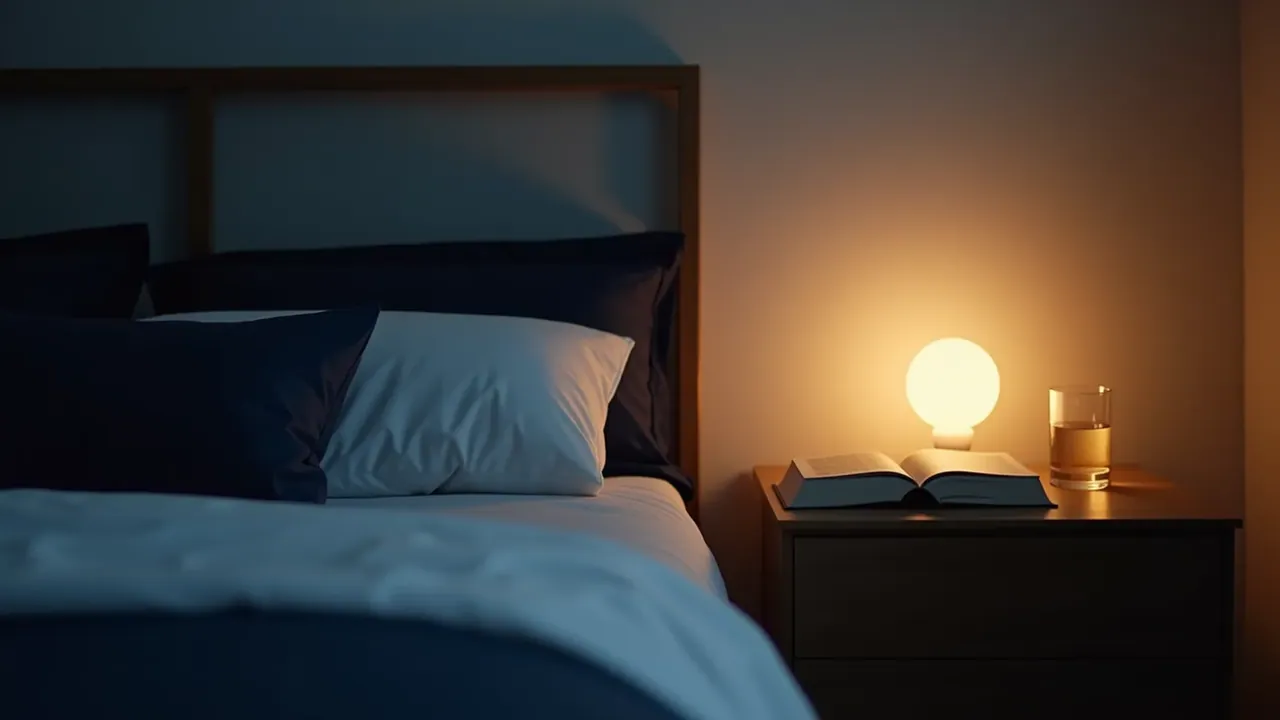
Build a bedside kit before you sleep
You won't make good decisions half-asleep. So make them now. Your bedside kit takes five minutes to set up:
- A cheap alarm clock, turned to face the wall, so you never see the time.
- A small notebook and pen, open to a blank page.
- A dim lamp or a low night light you can switch on without fully waking up.
- A glass of water.
- A paper book in another room, on the chair where you'll sit if you get up.
And one thing that's not there: your phone. Charge it in the kitchen or hallway. If you truly need it for emergencies, put it across the room, face down, on Do Not Disturb with your favourites allowed through.
The back-to-sleep plan for waking up at 3am after a breakup
- Lie still with your eyes closed and don't look for the time.
- Breathe slowly for two minutes, with the out-breath longer than the in-breath.
- Say the parking script below silently when she comes into your head.
- Write one line in the bedside notebook if a thought keeps returning, then close it.
- Get up after about 20 minutes awake, sit in dim light in another room and read paper until you feel sleepy.
- Get up at your fixed wake time anyway, however the night went.
Why the notebook works
A repeating thought at 3 a.m. is often your mind trying not to forget something. Writing it down tells your brain it's safe to let go. Keep it to one line: "The thing she said in March" or "Ask Tom about the flat". Don't write a diary entry. You can look at the line in daylight.
Why the fixed wake time matters most
After a bad night, the pull is to lie in. Don't. A fixed wake time, the same seven days a week, is what steadies your body clock over the following nights. You'll be tired for a day or two. That tiredness helps you sleep more deeply the next night.
Arjun and the 3:15 wake-ups
Arjun, 32, is a civil engineer in Leicester. In the six weeks after his partner left, he woke between 3 and 3:30 most nights and stayed up until after five, often scrolling. He moved his phone charger to the kitchen and bought a £7 alarm clock. He put a notebook by the bed and set a fixed wake time of 6:45, weekends included. The first week, he got up twice and read in the living room for about 25 minutes each time. By week three he was still waking most nights, but he was back asleep within half an hour on five nights out of seven.
The script for when the replay starts
Say this silently, slowly, as many times as you need. It doesn't argue with the thought. It just moves it.
"That's a her-thought. It's 3 a.m. thinking, and 3 a.m. thinking is always worse than the truth. It's on the list for tomorrow. Right now my only job is to breathe out slowly."
If you're replaying a specific argument over and over, that's a daytime job, not a night one. The method in how to stop replaying the breakup gives it a set time and place, which often makes it quieter at night too.
Daytime habits that make 3 a.m. quieter
What you do between 7 a.m. and 10 p.m. shapes the wake-ups.
- Get daylight early. Ten minutes outside within an hour of waking helps set your body clock.
- Move your body. A brisk walk or a short training session during the day makes deeper sleep more likely.
- Cut caffeine after lunch. Its effects can last well into the evening.
- Watch the evening drinks. Alcohol may help you fall asleep but tends to make the second half of the night lighter and more broken.
- Wind down without the phone. If bedtime is the hard part, read feeling lonely at night after a breakup.
Common mistakes with night waking
- Checking the time. "3:12, if I fall asleep now I'll get three hours" wakes you further. Turn the clock away.
- Reaching for the phone "just to check something". Once it's in your hand, her profile is one tap away. Keep it out of the room.
- Lying there for two hours. Bed becomes a place to worry. Get up after about 20 minutes.
- Napping long in the afternoon. A long nap steals sleep from the night. If you must, keep it under 20 minutes and before 3 p.m.
- Making decisions in the dark. No texts, no plans, no conclusions about your life between 10 p.m. and 7 a.m.
- You don't know what time you woke up, because you didn't look.
- On most nights, you're back asleep within about 30 minutes.
- The bedside notebook has short lines, not pages, and they look smaller in daylight.
- You're getting up at the same time every day, including weekends.
- If you're still awake for over an hour most nights after three or four weeks, look at evening alcohol, caffeine and screens first, then talk to your doctor.
The free No-Contact Survival Kit includes a short section on sleep, alcohol and the 3 a.m. mind, so the whole plan fits on one page by your bed.
This article is general wellness information, not medical advice. If poor sleep lasts more than a few weeks, or you feel hopeless or have thoughts of harming yourself, talk to a doctor. In a crisis, call or text 988 in the US (or Samaritans on 116 123 in the UK and Ireland), or contact your local crisis line or emergency services.
Key takeaways
- Brief night waking is normal. The replay that follows is what to fix.
- Set up a bedside kit and keep the phone out of the room.
- Don't check the time. Breathe out slowly and use the parking script.
- Get up after about 20 minutes awake, and keep a fixed wake time.
- Daylight, movement, less caffeine and fewer evening drinks make the wake-ups rarer.
Questions people ask
Why do I keep waking up at 3am after my breakup?
Sleep naturally gets lighter in the second half of the night, so brief wake-ups are normal for everyone. After a breakup, stress keeps your mind on alert, so a light patch becomes a full wake-up, and the first thing your brain reaches for is her. Alcohol in the evening and screens in bed can make those wake-ups more likely.
Should I get out of bed if I can't sleep at 3am?
If you've been lying awake for around 20 minutes and feel more alert rather than less, yes. Go to another room with dim light, read something on paper or write down what's on your mind, then go back when you feel sleepy. Lying in bed wrestling with thoughts teaches your brain that bed is a place for worrying.
How long does breakup insomnia last?
For many people, sleep improves over a few weeks as the initial shock settles, especially if they keep a regular wake time and cut evening alcohol and late screens. It varies a lot. If you're sleeping badly most nights for more than a month, or it's affecting your safety at work or on the road, talk to your doctor, who can check for other causes.
Is it okay to check my phone if I wake up in the night?
It's better not to. Checking the time starts the sleep maths, and the bright screen wakes you further. Once the phone is in your hand, her profile is one tap away, and that can cost you the rest of the night. Charge it outside the bedroom and use a cheap alarm clock, turned to face away from you.
Free survival kit
Get the sleep, alcohol and 3 a.m. plan on one page
In 30 minutes you finish with a phone that stops ambushing you, a 20-minute drill for every urge, calm replies ready if she gets in touch and a simple plan for your next seven days.