Drinking Every Night After a Breakup? How to Get Your Evenings Back
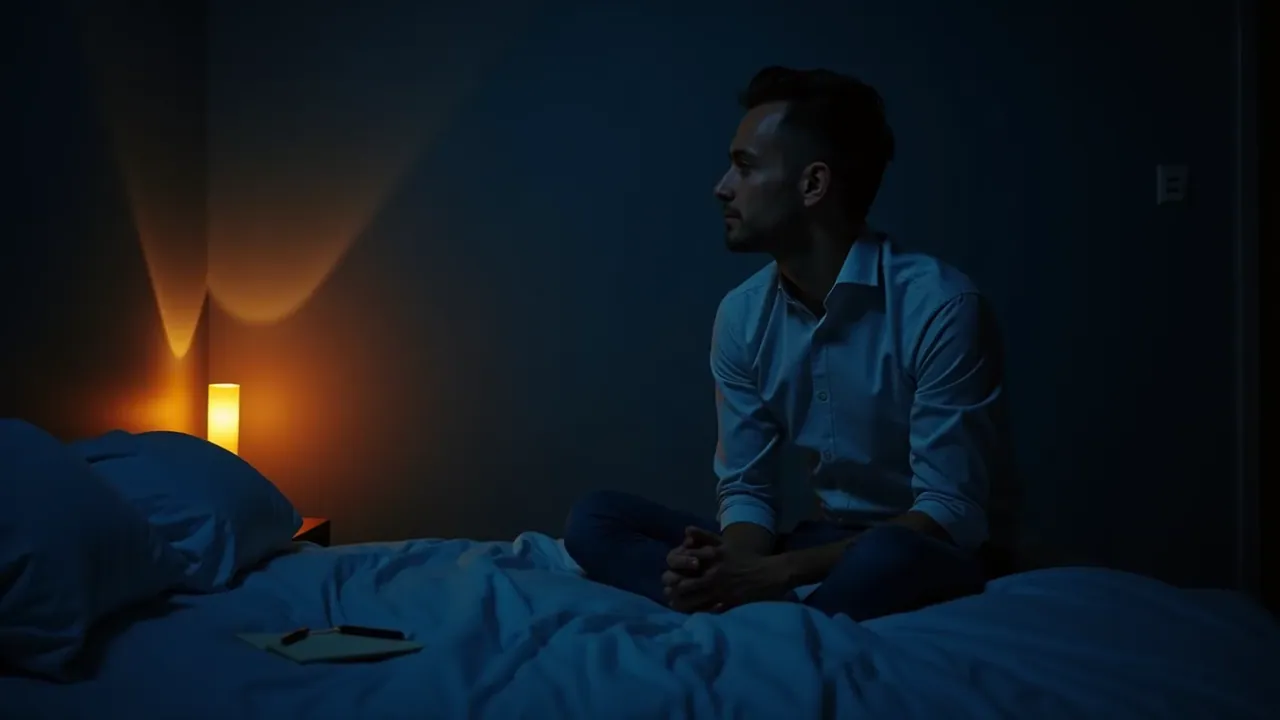
The drink isn't really the problem at 7 p.m. The empty flat is. Give that moment a new shape and the bottle loses most of its job.
Video version: Getting through 7 p.m. without a drink
Coming soon. Everything in the video is in the written guide below.
If you're drinking every night after a breakup just to switch off, focus on the moment you get home rather than on the bottle. Track three nights honestly, set a simple 30-day rule, empty the flat, and give the first 30 minutes after you walk in a fixed routine. Then the drink has much less of a job to do.
"I'm drinking most nights just to switch off."
It nearly always starts at the same time: about 7 p.m., when you open the door to the quiet flat, drop your keys where hers used to be, and reach for the fridge.
A clear drinking rule you keep for 30 days, and evenings you can get through sober without white-knuckling them.
Why 7 p.m. is the moment that matters
The main guide to drinking after a breakup explains why a drink feels necessary. Here is the short version: alcohol is fast, legal and socially normal, and it works for about an hour.
The bigger issue is timing. Getting home is often the loneliest point of the day. There is no one to tell about your day and no sound but the fridge. Your brain learns that this moment equals a drink, and after a couple of weeks the pull arrives before you have even thought about it.
Drinking to switch off also has a cost later. Alcohol can knock you out but tends to break up sleep in the second half of the night. Many men who wake at 3 a.m. after a breakup are seeing that effect of alcohol and sleep, and the post on waking up at 3am after a breakup deals with what to do in those hours.
How to stop drinking every night after a breakup: six steps
- Track three normal nights: what time you started, how much you drank and what happened just before.
- Write a 30-day rule in one line and stick it on the fridge.
- Clear the flat of alcohol on day one, including the "emergency" bottle.
- Build a 30-minute arrival routine for the moment you walk in.
- Write two if-then plans for your worst moments.
- Tell one person your rule and ask them to check in every Sunday.
Choosing a rule you can keep
The rule should be clear enough that you never have to debate it. Examples: "No drinking at home for 30 days." "Only with other people, never alone." "Weekdays dry; two drinks maximum on one weekend night." Pick the one that matches what your three tracked nights showed. If every drink was alone at home, the first rule is the obvious choice.
The arrival routine
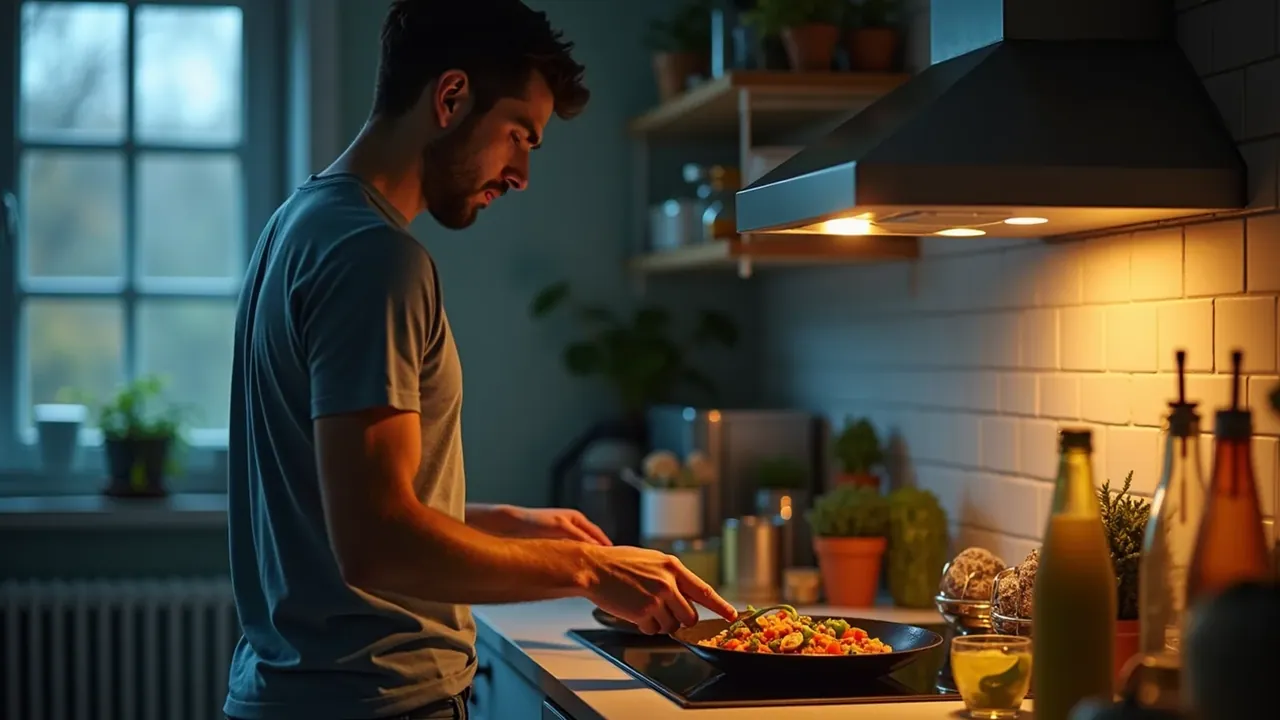
Your arrival routine fills the gap the drink used to fill. Keep it physical and the same every day: change out of work clothes, open a window, put music or a podcast on, pour an alcohol-free drink you actually like, and start cooking. Thirty minutes later the strongest pull has usually passed.
If-then plans to copy
An if-then plan decides in advance what you'll do when a trigger hits, so you don't decide at your weakest. Copy these and change the details:
If I get home and the flat feels silent, then I put a podcast on and start cooking before I take my coat off.
If a friend suggests "just one" on a weeknight, then I say: "I'm doing a month off. I'll have a lime and soda, and I'm still coming."
If I'm craving a drink after 9 p.m., then I set a 20-minute timer, go for a walk and decide when I'm back.
If I break the rule, then I write one line about what happened and carry on tomorrow. I don't scrap the month.
Chris's first 30 days
Chris, 34, a project manager in Cardiff, tracked three nights and found the same pattern each time: home at 6:50 p.m., first beer by 7, four or five by bedtime. He chose "no drinking at home" for 30 days, gave the remaining cans to a neighbour and bought alcohol-free lager and limes. His arrival routine was a shower, a podcast and cooking. He told his sister, who texted every Sunday. He slipped once, on day 12 after a bad day at work, wrote down why and carried on. By the end of the month he was falling asleep by 11:30 p.m. most nights and the 7 p.m. pull had faded to a passing thought.
Common drinking mistakes after a breakup
- Relying on "I'll just have one". That debate happens at your lowest point every night. A clear rule removes it.
- Keeping a bottle "for emergencies". Emergencies arrive nightly at 7 p.m. Clear the flat.
- Replacing drinking with nothing. An empty gap gets refilled. Put a routine and a drink you enjoy in its place.
- Treating a slip as failure. One night off-plan is information. Write it down and keep the 30 days going.
- Texting while drinking. Many no-contact slips happen after a few drinks. Leave the phone in another room in the evening.
Signs your evenings are coming back
- You've kept your rule on most of the last 14 days, written down on the calendar.
- The arrival routine happens without you having to think about it.
- You fall asleep more easily and wake less often in the small hours.
- You have more money and energy for training, food and people.
- If a sign is missing, tighten the rule for two weeks, or get support as described below.
Evenings that feel empty in other ways need their own plan too. The post on feeling lonely at night after a breakup covers the hours after dinner. If you'd like to see whether drinking, sleep or the checking loop is your biggest issue, take the two-minute Recovery Score quiz.
When drinking needs a doctor
For some men a nightly drink becomes hard to stop. Talk to a doctor if you can't keep limits you set, need more for the same effect, drink in the morning, feel shaky, sweaty or anxious when you don't drink, or people close to you are worried. Stopping suddenly after heavy daily drinking can be dangerous, so get medical advice first rather than going cold turkey. In the US, the SAMHSA National Helpline (1-800-662-4357) is free and confidential.
This is general information, not medical advice or treatment. If you feel hopeless, or you are drinking to stop thoughts of harming yourself, call or text 988 in the US (or Samaritans on 116 123 in the UK and Ireland), or contact your local crisis line or emergency services now.
Key takeaways
- Work on the moment you get home, not just the bottle.
- Track three nights, then choose a one-line 30-day rule that fits what you found.
- Fill the first 30 minutes with a fixed arrival routine and two if-then plans.
- If you can't keep limits or feel unwell without a drink, see a doctor before you stop.
Questions people ask
Is it bad to drink every night after a breakup?
Many people drink more after a breakup, and it is understandable. But a nightly drink to switch off tends to make sleep worse, lower your mood the next day and make late-night messages to your ex more likely. If it has become a nightly habit, a clear 30-day rule is a sensible experiment. If you can't keep to limits you set, talk to a doctor.
Why do I want a drink as soon as I get home?
The moment you walk into a quiet flat is often the loneliest part of the day after a breakup. A drink quickly takes the edge off and marks the end of work, so your brain starts to link getting home with opening a bottle. Changing what you do in the first 30 minutes after you arrive weakens that link faster than willpower alone.
Does alcohol help you sleep after a breakup?
It can help you fall asleep, but it tends to break up sleep later in the night. That is one reason so many people wake at 3 or 4 a.m. after drinking, often with racing thoughts. If you are struggling with sleep, cutting back on evening drinking is one of the most useful changes you can try.
When should I see a doctor about drinking after a breakup?
See a doctor if you can't stick to limits you set, need more to get the same effect, drink in the morning, feel shaky or unwell when you don't drink, or people close to you are worried. Stopping suddenly after heavy daily drinking can be medically risky, so get medical advice before you stop rather than going cold turkey on your own.
Free survival kit
Get through this week's evenings with a plan
In 30 minutes you finish with a phone that stops ambushing you, a 20-minute drill for every urge, calm replies ready if she gets in touch and a simple plan for your next seven days.