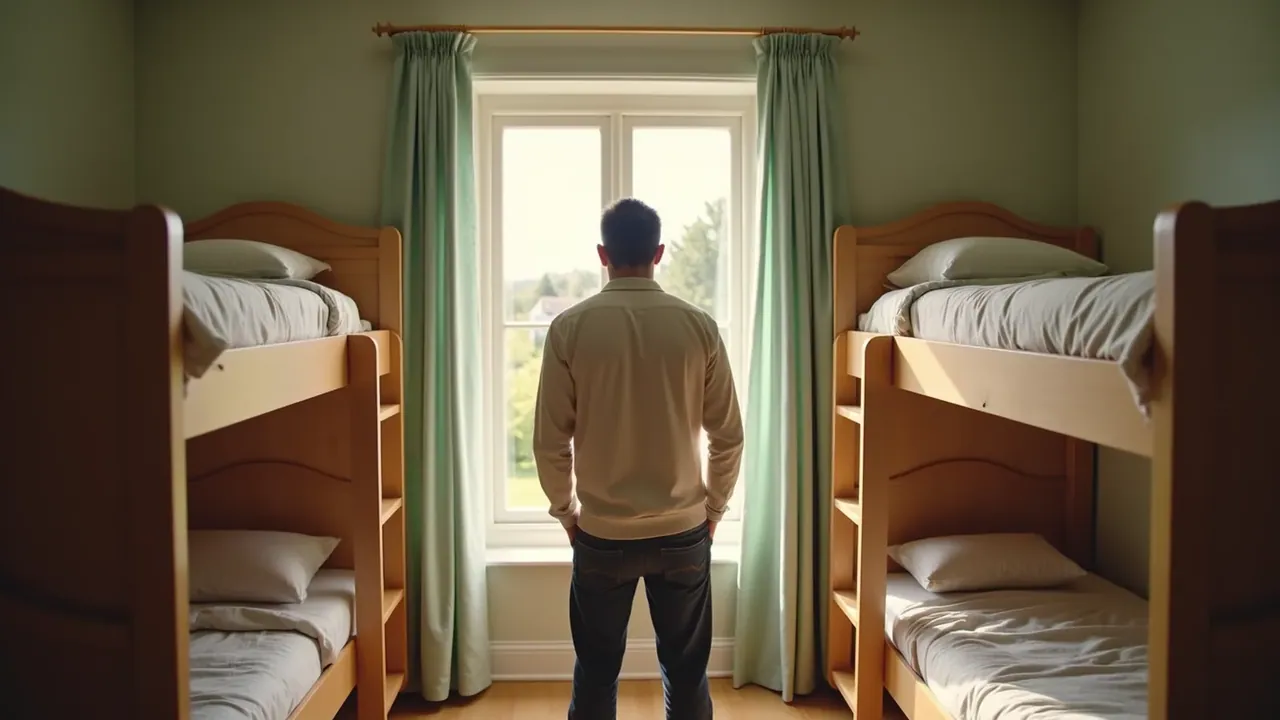
When Your Child Thinks the Divorce Is Their Fault: What to Say at Bedtime
Freezing the first time is normal. What matters is going back, calmly, with the words ready.
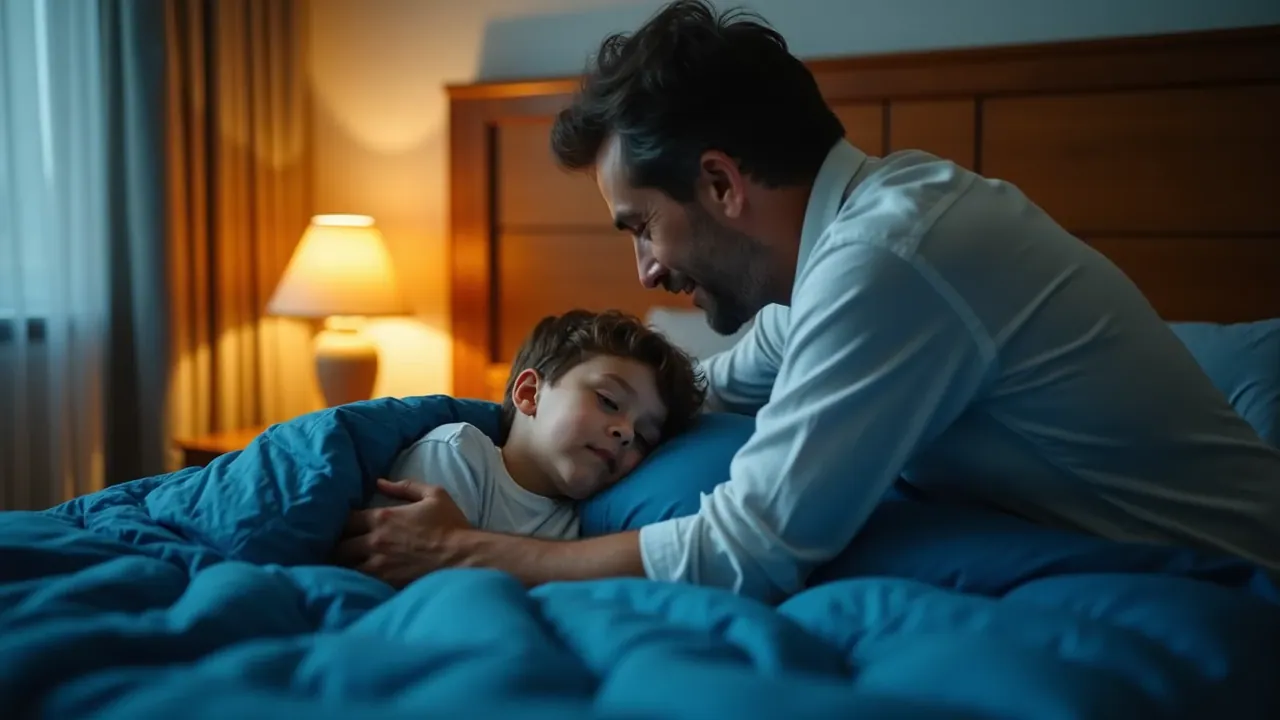
Video version: Was it my fault? Answering the bedtime question
Coming soon. Everything in the video is in the written guide below.
If your child thinks the divorce is their fault, the most important thing to say is short and repeated: "This is a grown-up decision. Nothing you did caused it, and nothing you could do would change it. We both love you, always." Then listen. If you froze the first time, you can go back the next day and say it.
"My son asked if the divorce was his fault, and I froze."
It happened at bedtime, lights low, the moment children save their biggest questions for. You opened your mouth and nothing useful came out.
Honest, age-appropriate answers ready for the questions children actually ask, so the next time one comes at bedtime, you can answer calmly and stay in the room.
Why children decide it was their fault
Children aren't being dramatic when they ask this. Younger kids especially have what psychologists call magical thinking: they believe their thoughts and actions cause big events. If they were told off for shouting the week before Dad moved out, the two things can get linked in their head.
Older children have other reasons. Some remember arguments about them: about homework, about bedtimes, about money for their clubs. Others prefer blaming themselves to the scarier idea that their parents couldn't fix something. Self-blame in children after a separation is common, and often silent. The ones who ask out loud are giving you a chance to help.
And you froze because you're a father who loves his son and is in pain yourself. Freezing isn't failure. It's what happens when a question lands on a bruise.
What to say when your child thinks the divorce is their fault
- Go back to it within a day or two, at a calm moment similar to the first one.
- Name it plainly: "The other night you asked if the divorce was your fault. I want to answer properly."
- Give the short answer, and say it slowly enough that it lands.
- Ask what made them wonder, and listen without correcting.
- Answer the specific worry they name, briefly and honestly.
- Tell them they can ask again any time, and that you'll always give the same answer.
The repair conversation
Going back is a gift, not an admission of getting it wrong. A repair conversation shows your child that hard questions are welcome and that you'll come back to them. Keep it to five minutes. You don't need to explain why you froze. "That was a big question and I wanted to get it right" is enough.
Listening for the hidden worry
"What made you think that?" often brings out something specific. "Because you and Mum argued about my football." "Because I said I hated living here." Address that exact thing: "We sometimes disagreed about football times, and that's normal. It's not why we separated. Grown-ups separate because of grown-up problems."
Short answers to the other bedtime questions
These are the questions kids ask about divorce most often. Keep the answers close to these, and say them the same way every time.
"Is it my fault?" "No. It's a grown-up decision. Nothing you did caused it."
"Can I fix it?" "No, and it isn't your job. Your job is being a kid. We'll do the grown-up part."
"Will you get back together?" "No, we won't. But we'll both always be your mum and dad."
"Do you still love Mum?" "I'll always care about her because she's your mum. We're just not going to be married."
"Will you stop loving me?" "Never. Parents don't stop loving their children. That's a different kind of love."
"Where will I live?" "At both homes. Here's the calendar, let's look at it together."
If you don't know an answer, it's fine to say "I don't know yet. When I know, I'll tell you."
Ollie's question, and Ben's second try
Ben, 39, froze when his son Ollie, 8, asked "Is it because I was naughty?" on a Tuesday night. The next evening, at the same bedtime, Ben sat on the bed and said, "Last night you asked something important." Ollie said he'd heard them shout about his school report. Ben explained that it wasn't why, and that grown-ups separate for grown-up reasons. Ollie asked again a fortnight later, after Ben's move, and Ben gave the same answer word for word. Ollie nodded and asked for another chapter of his book.
Mistakes that make the guilt stick
- Over-reassuring. A long speech can sound like you're convincing yourself. Fix: one short sentence, said calmly, then listen.
- Changing the subject. It tells them the question is dangerous. Fix: stay with it, even for two minutes.
- Explaining the real reasons. Affairs, money or who decided are adult matters. Fix: "It's a grown-up decision" covers it.
- Blaming their mum. "Ask your mother" puts them in the middle. Fix: speak for yourself, warmly, and agree the same answers with her if you can.
- Treating a repeat question as a setback. Kids test answers over time. Fix: same words, same calm, every time.
When to get extra help
Most children settle over months with steady answers and steady routines. But watch for signs that it's sticking: persistent sadness, bed-wetting after being dry, trouble at school, angry outbursts, or talk of being a burden or a bad person. A family therapist, your GP or the school counsellor can help. If a child ever talks about wanting to hurt themselves, speak to a doctor or emergency services that day; in the US you can also call or text 988 (or Samaritans on 116 123 in the UK and Ireland), which supports young people too.
The guide to telling your kids about divorce has more on these answers and on keeping close between visits. If you haven't yet had the first conversation, start with what to say to kids about divorce, which covers agreeing the words with their mum.
These conversations take a lot out of you. On the nights they happen, have a plan for yourself once the kids are asleep. The Survival Kit has a ten-minute nightly release for exactly that. And if their weeks away are the hard part, see weekends without kids after divorce.
- You've gone back to the question and answered it calmly.
- You can say the short answers without your voice going.
- Your child asks again sometimes, and you give the same reply each time.
- Their sleep, schoolwork and mood are steady or slowly settling.
- If a sign is missing after two or three months, talk to the school or a family therapist.
Key takeaways
- Children often blame themselves; it's common and it can be eased.
- If you froze, go back: a repair conversation is a strength.
- Short, identical answers, repeated over months, work better than long explanations.
- Listen for the hidden worry and answer that exact thing.
- Persistent changes in mood, sleep or school are a reason to get professional support.
Questions people ask
Why do children blame themselves for divorce?
Young children see the world with themselves at the centre, so when something big happens they often look for what they did to cause it. They may remember an argument about their behaviour, or notice that parents fought about homework or bedtimes. Older children sometimes blame themselves because it feels better than believing the adults could not fix it. It is common and it can be eased.
How many times do I need to tell my child it's not their fault?
Probably many times, over months. Children often ask the same question again when something new happens, such as a move, a birthday or a parent's new partner. Each time, answer briefly and calmly with the same words. Repetition is not a sign that your earlier answer failed. It is how children check that the answer is still true.
What if my child asks who wanted the divorce?
Give an answer that is honest without putting either parent on trial. Something like 'We both agreed it's the right thing for our family, even though it's sad' works for most ages. If it was not mutual, you can say 'It was a grown-up decision, and the grown-ups are dealing with it'. Avoid details that make the child feel they need to take sides.
When should a child see a therapist after divorce?
Consider professional support if, after a few months, your child is persistently withdrawn, anxious, angry, struggling at school, sleeping badly or talking about being a burden. Your GP, the school counsellor or a family therapist can assess what is needed. If a child ever talks about wanting to hurt themselves, contact a doctor or emergency services the same day.
Not therapy, and no promised results
BreakupRecovery is educational self-help, not therapy, counselling or medical care, and it does not promise any particular result or timeline. Recovery looks different for everyone. Examples are illustrative composites, not real clients. If you feel hopeless or have any thoughts of harming yourself, call or text 988 (the US Suicide and Crisis Lifeline); in the UK and Ireland, call Samaritans on 116 123, or contact your local crisis line or emergency services right away. Read the full disclaimer.

Free survival kit
Look after yourself after the hard conversations
In 30 minutes you finish with a phone that stops ambushing you, a 20-minute drill for every urge, calm replies ready if she gets in touch and a simple plan for your next seven days.