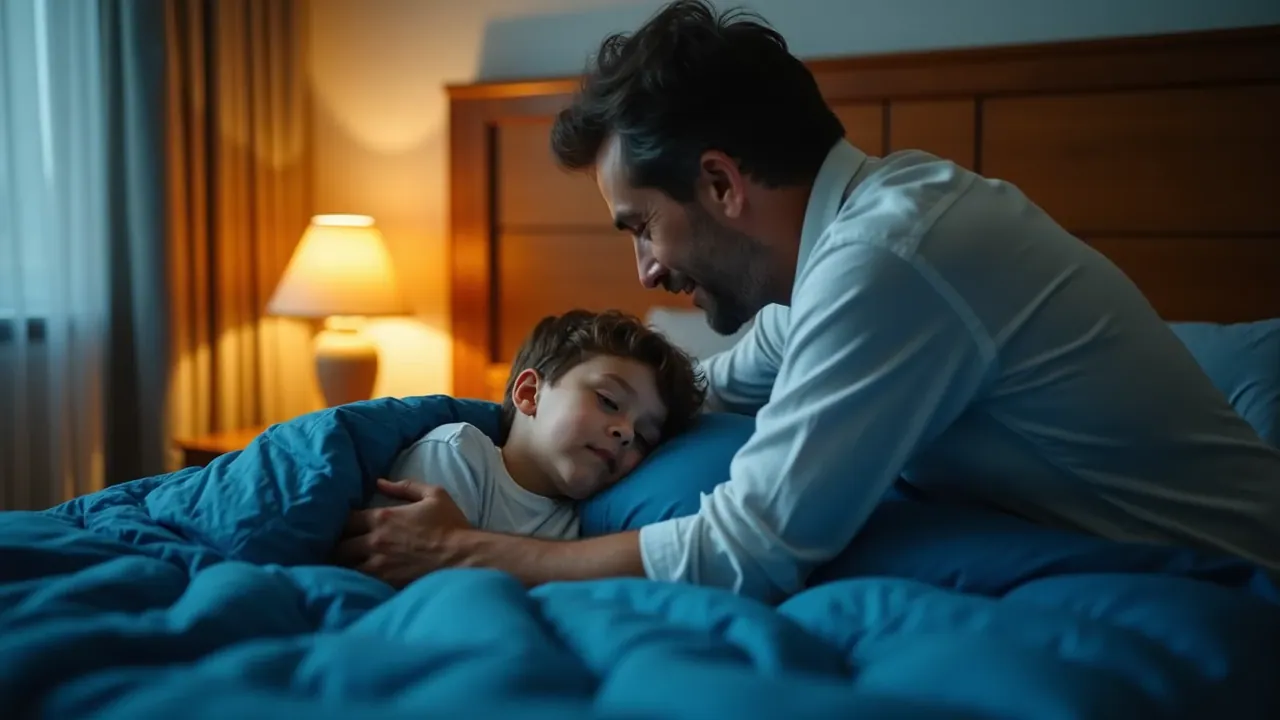
What to Say to Kids About Divorce: Agreeing the Words With Their Mum
The conversation itself takes ten minutes. Getting both parents to say the same thing is the part that protects your children.
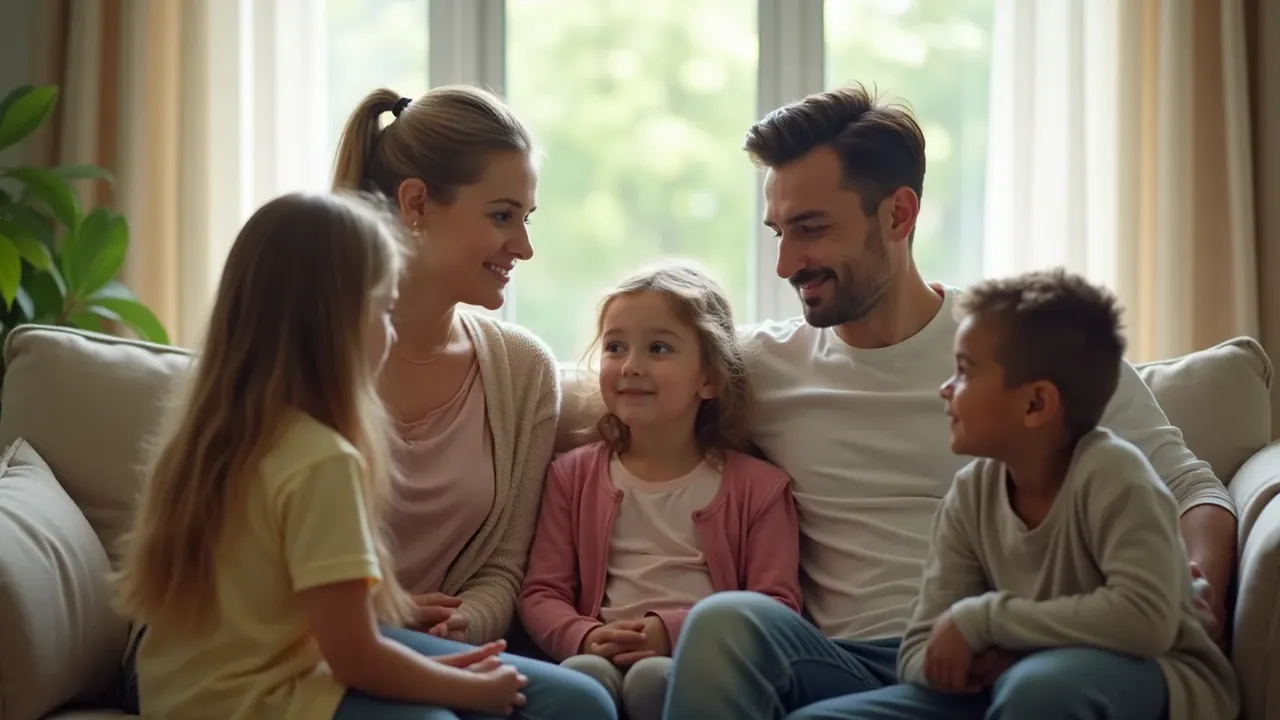
Video version: Agreeing what to tell the kids, before you tell them
Coming soon. Everything in the video is in the written guide below.
Knowing what to say to kids about divorce starts before you sit them down: agree one shared message with their mum. The core is four sentences. You've decided to live in two homes. It's a grown-up decision and not their fault. You both love them, always. Here's exactly what happens next for them.
"I don't know how to tell the kids we're splitting up without wrecking them."
The moving-out date is getting closer, and every evening you look at them and think "not tonight".
One calm conversation, ideally with both parents, with agreed words that put the children first. Afterwards your kids know what's happening, know it isn't their fault, and know both parents are still in their corner.
Why the preparation matters more than the speech
Children usually remember less about the exact words than about how their parents were in the room. Did they look at each other? Did one of them cry? Did one interrupt the other? A calm, joint message tells them something a script can't: their parents can still work together for them.
That's why the hardest part of telling children parents are separating is the conversation you have first, with her. It can feel impossible to agree on anything right now. But you don't need to agree on why the marriage ended. You only need to agree on what the children hear.
The pillar guide, how to tell your kids about divorce, has a full script for the conversation itself. This post focuses on the joint planning and on adapting the words to each child's age.
Agreeing what to say to kids about divorce with their mum
Send her a short message proposing a planning chat, without the children there. Keep it about them. Then work through these steps together, in person, on a call or by email if that's calmer.
- Agree the one-sentence reason, with no blame, that you'll both use from now on.
- Agree the practical facts the children need: who moves, where, and when they'll be at each home.
- Decide who says which part, so neither of you takes over or contradicts the other.
- List the questions you expect, and agree an honest short answer to each.
- Choose a day and time with no school pressure and both of you free afterwards.
- Promise each other one thing: no blame, no correcting, no tears turned into a scene in front of them.
The one-sentence reason
This is the sentence the children will repeat to friends and grandparents. It needs to be true, simple and blame-free. "Mum and Dad have tried hard, and we've decided we'll be happier and better parents living in two homes." Not "Mum doesn't love Dad anymore". Not "Dad has met someone".
If she won't plan it together
Sometimes a joint conversation isn't possible. Then send her your proposed wording in writing and say you'll use it. That way, even if you tell them separately, the shared message is the same. If there are safety concerns, put safety first and speak to a family lawyer or support service about how to handle it; in the US, the National Domestic Violence Hotline (call 1-800-799-7233 or text START to 88788; in the UK, the National Domestic Abuse Helpline on 0808 2000 247 or the Men's Advice Line on 0808 801 0327) can help you plan.
Words for each age
An age-appropriate explanation changes the detail, not the message.
Under seven: "Mum and Dad are going to live in two different houses. You'll have a bedroom at both. We both love you exactly the same, and that never changes. This isn't because of anything you did. On school days you'll be at Mum's, and Fridays and Saturdays you'll be with me."
Seven to eleven: "We've decided to separate, which means we won't be married anymore and we'll live in two homes. It's a grown-up decision, and nothing you did caused it or could have stopped it. You'll still see both of us a lot. Here's the calendar. Ask us anything, today or any day."
Twelve and over: "We've decided to separate. We're not going to share every reason, because some of it is between us, but it isn't about you. We'd like to hear what you think, including if you're angry. Some things will change, and we'll talk them through with you rather than at you."
Common mistakes when telling the children
- Telling them in pieces. One child overhears, then the other is told a week later. Fix: tell all siblings at the same time, then give each one time alone afterwards.
- Arguing over the wording by text. It turns the plan into a fight. Fix: keep the planning short and practical, using the approach in co-parenting with a difficult ex.
- Over-explaining. Long explanations are often for the parents' sake. Fix: the one-sentence reason, then answer what they ask.
- Promising nothing will change. They'll find out quickly that things have. Fix: name what changes and what stays the same.
- Hiding your own sadness completely. A wobble in your voice is fine. Fix: "I'm sad too, and we're going to be okay." Save heavier feelings for adults.
- Doing it the night before the move. They need time to adjust. Fix: a week or two ahead, where you can.
Tom and Aisha plan the Saturday
Tom, 43, and his wife Aisha agreed to separate in March, with Tom moving out in early April. They met for an hour in a café and wrote the plan on one sheet: the reason sentence, the calendar, and who would say what. Aisha opened, Tom explained the two homes, and both answered questions. Their daughter, 11, cried and asked if the dog would stay. Their son, 8, asked about his bunk bed. The talk took twelve minutes. Afterwards, they all walked the dog together.
The days after the conversation
Expect the questions to come later, often at bedtime or in the car, when the children feel safe. The commonest is some version of "Was it because of me?", and what to do if your child thinks the divorce is their fault has honest answers for that moment.
Let the school know so teachers can watch for changes. Many schools have a school counsellor or pastoral lead who supports children through family changes. If a child seems very withdrawn, angry or anxious for more than a few weeks, a family therapist or your GP can advise.
And look after yourself the evening it's done. It's one of the hardest conversations a father has. The free Survival Kit has a short nightly release routine for evenings like that one.
- Both of you used the same one-sentence reason, and the children can repeat it.
- The kids know which nights they'll be at each home.
- They've asked at least one question, and you answered it without blame.
- Nobody argued in front of them during or after the conversation.
- If one child goes very quiet, give it a few days, then check in alone; if it lasts weeks, talk to the school or a family therapist.
Key takeaways
- Agree the words with their mum first; how you are in the room matters most.
- Use one blame-free sentence as the reason, and practical facts for the rest.
- Adjust the detail by age, never the core message.
- Tell siblings together, avoid key dates, and leave time for questions.
- Expect more questions later, and bring in the school if needed.
Questions people ask
Should both parents tell the kids about divorce together?
Where it is safe and possible, yes. Telling the children together shows them that their parents can still cooperate, and it means they hear one version, not two. Agree the words beforehand, decide who says which part, and promise each other not to blame or correct during the conversation. If being in the same room is not safe or would end in an argument, each parent can use the same agreed script separately.
How do you explain divorce to a young child?
Keep it short, concrete and about their daily life. A child under seven needs to know that mum and dad will live in two homes, that both still love them, that it is not their fault, and where they will sleep on which nights. Abstract reasons mean little at that age. Expect to repeat the same simple message many times over the following weeks.
What should you not say to children about divorce?
Avoid blame, adult details and anything that asks them to choose. Do not explain affairs, money problems or who wanted the divorce. Do not say things you cannot promise, such as nothing will change. And do not ask them which house they would prefer. Children are half of each parent, so criticism of either parent can land on them.
When is the best time to tell kids about a separation?
Many parents choose a weekend morning a week or two before anyone moves out, when both parents can be around afterwards and there is no school the next day. Avoid birthdays, exam weeks and right before bedtime. Children need time to ask questions and to see that ordinary life carries on, so a quiet day at home after the conversation helps.
Not therapy, and no promised results
BreakupRecovery is educational self-help, not therapy, counselling or medical care, and it does not promise any particular result or timeline. Recovery looks different for everyone. Examples are illustrative composites, not real clients. If you feel hopeless or have any thoughts of harming yourself, call or text 988 (the US Suicide and Crisis Lifeline); in the UK and Ireland, call Samaritans on 116 123, or contact your local crisis line or emergency services right away. Read the full disclaimer.

Free survival kit
Stay steady through the week you tell them
In 30 minutes you finish with a phone that stops ambushing you, a 20-minute drill for every urge, calm replies ready if she gets in touch and a simple plan for your next seven days.