Weekends Without Kids After Divorce: Stay Close and Use the Time Well
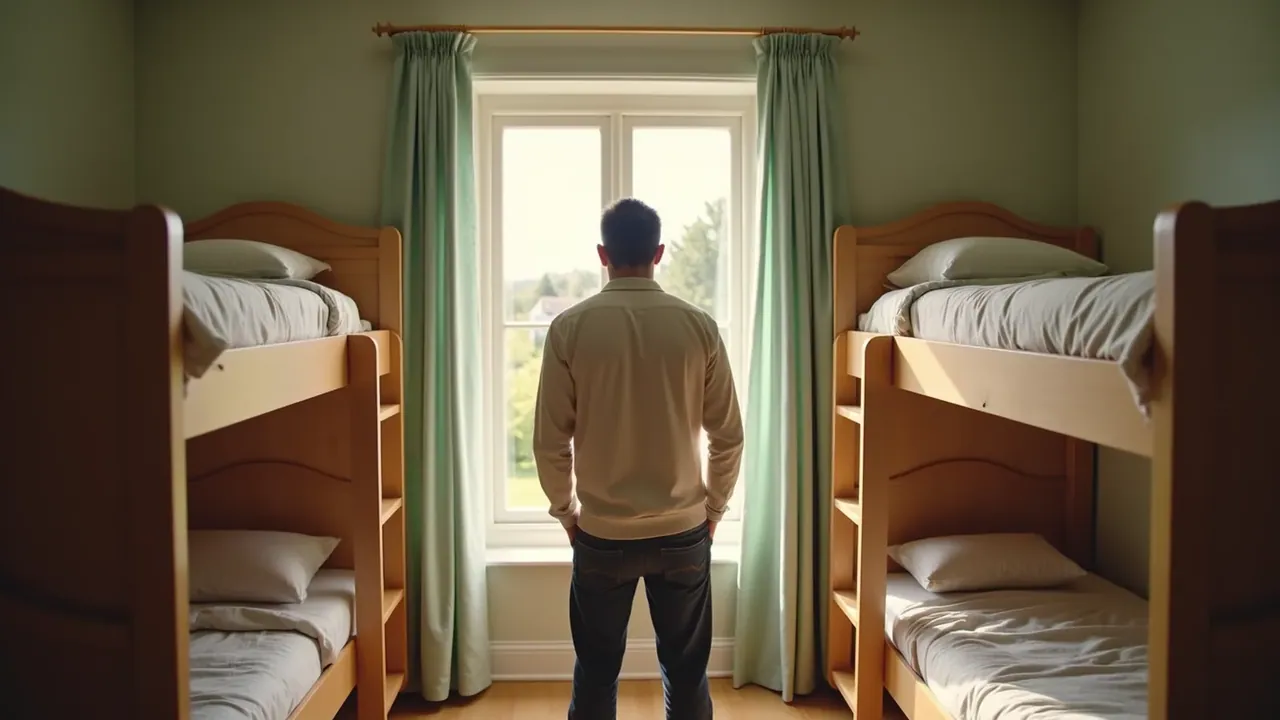
The bunk beds are made and the flat is silent. Those 48 hours can be the loneliest of the week, or the ones that rebuild you.
Video version: The weekends without them: a plan that helps
Coming soon. Everything in the video is in the written guide below.
Weekends without kids after divorce get easier when you split them into two jobs: staying close to your children with small, predictable contact, and using the rest of the time for your own recovery. Plan both by Thursday. An empty Saturday with no shape is where missing them turns into a long, heavy weekend.
"On her weekends the house is so quiet I don't know what to do with myself. I miss them like crazy."
The Sunday blues hit hardest: the bunk beds made and empty, a stray sock under the sofa, the TV on for the noise.
You stay close to the children between visits, and you use your own days for your own recovery, so the weekends without them stop being the lowest point of your fortnight.
Why the quiet hits so hard
For years, weekends had a shape: swimming lessons, birthday parties, the supermarket run, someone needing a lift. That shape held you up without you noticing. When the children are at their mum's, the structure vanishes along with them.
There's a second layer. Missing my kids after divorce is grief, even though you'll see them on Wednesday. You're mourning the everyday version of fatherhood: breakfast together, the bath-time chaos, the random question in the car. That deserves to be felt, not just managed.
The pillar guide covers staying close on the days they're not with you in brief. Here's the fuller plan, for both halves of the job.
Part one: staying connected between visits
Your children don't need constant contact. They need predictable contact. A short call at the same time each week tells them you're there without pulling them out of their time at the other home.
- Agree a regular call time with their mum, in writing, such as Wednesday and Saturday at 6 p.m.
- Keep each call short and light: one question about their day, one thing from yours, one thing to look forward to.
- Start one small shared ritual that continues across both homes, such as a book you each read a chapter of.
- Send the occasional photo or voice note that asks nothing of them: the dog, a funny sign, a match result.
- Put one thing on the calendar for their next stay, so they know something good is coming.
Contact rules that protect the children
When the kids are at their mom's, keep their mum's household out of the conversation. Don't ask what they did with her or who was there. Don't let them feel guilty for having fun. "Sounds brilliant, tell me more" is the right response to "We went bowling with Mum".
If they don't want to talk some weeks, that's normal. Keep the call short and say you'll speak on Wednesday. Staying connected between visits is about reliability, not length.
Part two: weekends without kids after divorce, with a shape of your own
Build a simple weekend routine with three anchors. Each one fills part of the time and does a different job.
- Something physical, on Saturday morning: a run, a gym session, five-a-side, a long walk. It burns off the restlessness and sorts out your sleep.
- Something with people, on Saturday or Sunday: a pint with a friend, a family visit, a club, a volunteering shift.
- Something that's yours: a project, a skill, a hobby you dropped years ago. This is the one that slowly answers "who am I now?", which who am I after divorce explores in more depth.
Then leave some time unplanned on purpose. Rest is allowed. The difference is that it's chosen, not something that happens to you.
A weekend plan you can copy
Write this into your phone on Thursday evening, filled in for the weekend ahead.
Friday after drop-off: gym, then a takeaway and a film I chose.
Saturday: 9 a.m. park run. Afternoon: two hours on the shed project. Evening: pint with Gaz at 7.
Sunday: lie-in. Call the kids at 6. Walk before the call, not after. Prep for Monday.
The hour I dread: Sunday 4 to 5 p.m. My plan for it: the walk, with a podcast.
That last line matters. Name your worst hour, and give it a job.
Rafael's Sunday hour
Rafael, 46, found Sunday afternoons unbearable on the weekends his daughters, 7 and 10, were at their mum's. He set a Saturday 6 p.m. video call with the girls and started a shared book with each one. He joined a Saturday morning cycling group, and booked Sunday 4 p.m. as his "walk and call my brother" slot. In the first month he skipped the cycling twice. By month two, he says Sunday is still quieter than he'd like but no longer the worst part of the week.
Mistakes that make the empty weekends worse
- Leaving it to Saturday morning. You'll wake up flat and nothing will happen. Fix: plan by Thursday.
- Calling the children too often. It can unsettle them at the other home. Fix: a reliable pattern, agreed with their mum.
- Spending the time on the divorce. Scrolling legal forums or rereading messages all weekend keeps the wound open. Fix: one fixed admin hour, then stop.
- Drinking through Sunday. It numbs the evening and wrecks Monday. Fix: keep the alcohol for social occasions, with other people.
- Treating time alone as a punishment. It's also the only time you'll get to rebuild yourself. Fix: one hour each weekend on something that's only yours.
When the missing feels like too much
Some weekends will be heavy whatever you plan. That's grief, and it's allowed. If, over weeks, the weekends leave you feeling hopeless, or you can't get out of bed, talk to your GP or a counsellor. If you ever have thoughts of harming yourself, call or text 988 in the US (or Samaritans on 116 123 in the UK and Ireland), or contact your local crisis line or emergency services straight away.
Friends are part of this too. If your social circle has shrunk since the separation, making friends after divorce as a man has a simple weekly rhythm. And if you're unsure what to work on first, the two-minute Recovery Score quiz points you to the right starting place.
- You have a regular call time with the children, and you keep it.
- Each child-free weekend has three anchors planned by Thursday.
- You've named your hardest hour and given it something to do.
- The kids talk about their time at both homes without looking guilty.
- If Sunday still floors you after six weeks, change one anchor or add a person to it.
Key takeaways
- Split the weekend into staying close and rebuilding yourself.
- Predictable, short contact beats frequent, long calls.
- Three anchors: something physical, something with people, something that's yours.
- Name the hour you dread and give it a plan.
- Heavy weekends are grief; get help if they turn into hopelessness.
Questions people ask
How do I cope when my kids are at their mom's?
Give the time a shape before it arrives. Plan one fixed contact point with the children, such as an agreed call, then fill the rest of the weekend with three anchors: something physical, something with people and something that is yours. Unplanned empty time is where the missing turns into a spiral. Plan it on Thursday, not on Saturday morning.
How often should I call my kids when they're with their mother?
Agree a regular, predictable time with their mum, such as one call midweek and one at the weekend, and keep it short and light. Children usually do better with a reliable pattern than with frequent calls that interrupt their time at the other home. Older children may prefer messages. Follow their lead, and don't use calls to ask about their mum's household.
Is it normal to feel lost when the kids leave after a weekend?
Yes, very. Many separated fathers describe the hour after a drop-off as the hardest of the week: the house is suddenly quiet and the routine that held the weekend together disappears. Having a set ritual for that hour, such as a walk, the gym or a call with a friend, takes much of the sting out of it.
Should I use weekends without the kids to work?
Some work can help, but filling every child-free weekend with work tends to postpone the grief rather than ease it. It can also leave you exhausted for the weeks the children are with you. Aim for a mix: a bit of rest, some time with people, some movement and one project of your own that has nothing to do with work or the divorce.
Not therapy, and no promised results
BreakupRecovery is educational self-help, not therapy, counselling or medical care, and it does not promise any particular result or timeline. Recovery looks different for everyone. Examples are illustrative composites, not real clients. If you feel hopeless or have any thoughts of harming yourself, call or text 988 (the US Suicide and Crisis Lifeline); in the UK and Ireland, call Samaritans on 116 123, or contact your local crisis line or emergency services right away. Read the full disclaimer.

Free planner
Give your weekends a shape again
In 25 minutes: your hard hours mapped, a Friday-to-Sunday plan with fixed points, a short list of people and a calm plan for the weekends that go badly.