How to Tell Your Parents You're Getting Divorced When You Feel Ashamed
Every Sunday call where you say 'all fine here' makes the next one harder. One planned conversation ends that.
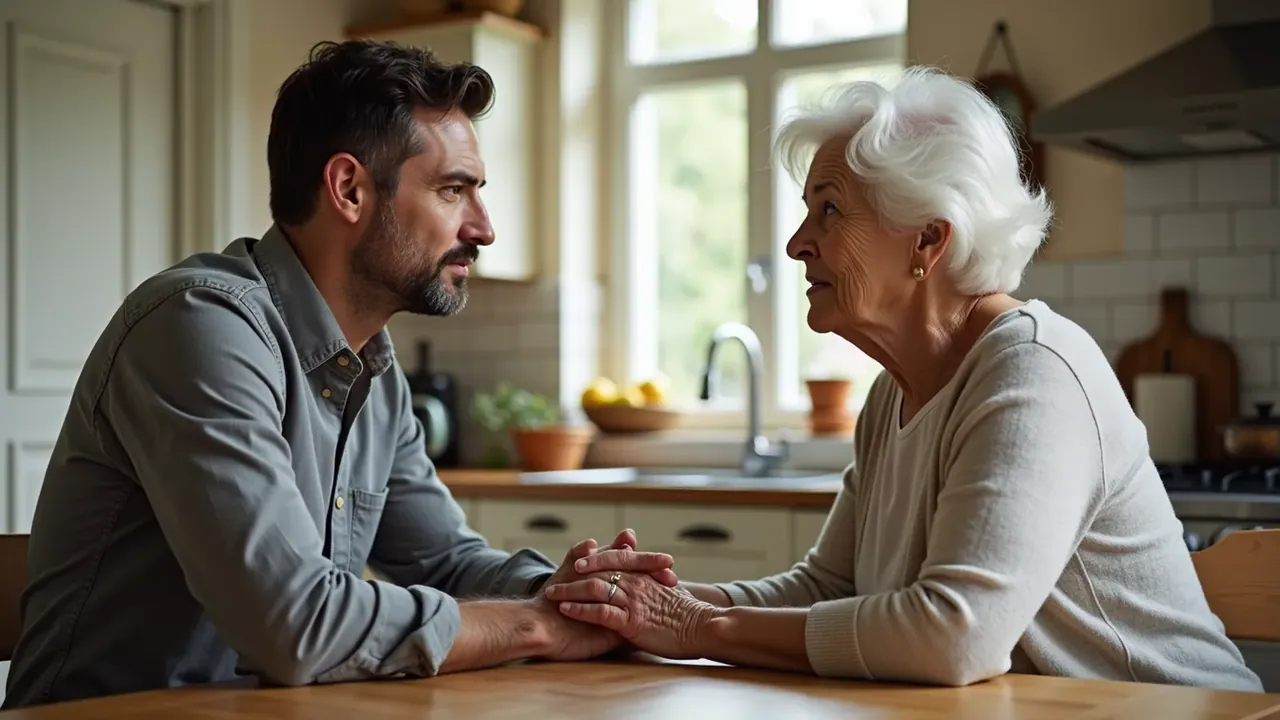
Video version: Telling your parents about the divorce
Coming soon. Everything in the video is in the written guide below.
If you're wondering how to tell my parents I'm getting divorced, plan one calm conversation instead of waiting for the right moment. Choose a time with no rush, lead with the headline, give the practical facts about the children, say what you need from them, and draw one clear line on what you won't discuss. Then let them react.
"I haven't told my parents yet. I'm ashamed, and I know my mum will be devastated."
It's the Sunday phone calls. Your mum asks how everyone is, you say "all fine here", and you feel the weight of it for the rest of the evening.
You've told them in one calm conversation, with a clear line on what you do and don't want to discuss, and the secret is no longer sitting on your chest.
Why telling your parents feels so heavy
Telling a colleague is awkward. Telling your parents can feel like confessing. Many men carry a quiet sense that they're letting their parents down, especially if their parents have been married for forty years or more.
There's also protection at work. You know your mum will cry. You know your dad will ask questions you don't want to answer. Keeping it secret feels like sparing them, and sparing yourself.
But secrets grow. Every "all fine here" adds a little more to what you'll eventually have to say. And they'll hear eventually: from a grandchild, a neighbour, or a photo on social media. Hearing it second-hand hurts them more than hearing it from you.
Feeling ashamed to tell parents about divorce is common. It doesn't mean you have anything to be ashamed of. If the shame is loud, feel like a failure after divorce goes into it properly.
How to tell your parents you're getting divorced, step by step
- Decide whether to tell them together or separately, and in person, on video or by phone.
- Pick a time with no rush and no other family around, not a birthday or holiday.
- Write down your headline, the practical facts and the one thing you need from them.
- Write one line for anything you don't want to discuss, and practise saying it.
- Have the conversation, and let them react without filling every silence.
- Send a short message the next day thanking them, and repeat what you need.
What to include
Your parents will mostly want to know three things: are you okay, are the grandchildren okay, and what happens now. Cover those and you've covered most of it. The reasons for the divorce are optional, and you can choose how much to share.
Drawing your line
Boundaries are easier to hold if they're decided in advance. You might be happy to say it was mutual, or that you grew apart, and not want to go into affairs, arguments or money. Write the line down so you don't have to invent it under pressure.
What to say
Adapt these words to your own family. Keep the first part short.
The headline: "Mum, Dad, I need to tell you something difficult. Sarah and I are separating. We've decided to get divorced."
The children: "The kids are doing okay. They'll be with me every other week and on Wednesdays. We've told them together."
How you are: "I'm sad, and I'm managing. I'm getting support."
What you need: "What would help most is if you keep things normal with the kids, and keep seeing them."
Your line: "I'm not going to go into the reasons. It's between Sarah and me, and I hope you can understand that."
If they press: "I know you want to understand. I'm just not ready to talk about that part."
Handling their reactions
Parents react in all sorts of ways, and first reactions rarely last.
- Tears. Let them cry. You don't need to fix it. "I know, it's sad. It's been sad for me too."
- Questions. Answer the practical ones; use your line for the rest.
- Blame, of you or of her. Don't argue. "I understand you're upset. I'm not going to get into blame."
- Silence. Some dads go quiet. Give it time. Many come back later with something kind.
Gavin tells his mum and dad
Gavin, 41, avoided telling his parents for five months. Every Sunday call ended with "all fine". He finally drove over on a Saturday afternoon with notes on his phone. He said the headline in the first minute, then talked about the kids. His mum cried; his dad asked "Was it something you did?" Gavin used his line: "It's between us, Dad, and we're both focused on the kids." His dad nodded. Two days later his dad texted: "Proud of how you're handling it. Bring the kids for lunch Sunday."
Mistakes that make it harder
- Telling them at a family occasion. Birthdays and Christmas turn it into a scene. Fix: a quiet, separate time.
- Over-explaining the reasons. It invites judgement of you or her. Fix: your one line, repeated as needed.
- Criticising your ex. Your parents may still see her at grandchildren's events. Fix: keep it neutral.
- Leaving it until they hear elsewhere. It hurts them more. Fix: tell them soon, before it spreads.
- Expecting a perfect reaction straight away. Fix: give them days, even weeks, to settle.
Grandparents and the children
Children usually benefit from staying close to grandparents on both sides. Ask your parents to keep adult matters out of the grandchildren's hearing, not to question them about their mum's house, and not to pass messages. Some grandparents choose to stay friendly with their former daughter-in-law for the children's sake. That's usually a good thing.
Telling family about divorce gets easier after the first conversation. For siblings, friends and colleagues, the pillar guide on how to tell people about your breakup or divorce has more scripts, and what to say at work about divorce covers the office. If the conversation leaves you shaken, the free Survival Kit has a short nightly release for that evening.
- Your parents know, and you heard their reaction directly.
- You stuck to your line on what you won't discuss.
- They know what you need from them, especially with the kids.
- Sunday calls no longer start with a lie.
- If the relationship stays strained after a few weeks, keep contact around the grandchildren and lean on friends for the emotional side.
Key takeaways
- Secrets grow; one planned conversation ends the "all fine here" calls.
- Cover the headline, the children, how you are and what you need.
- Decide your line on what you won't discuss before you start.
- Let them react, and give them time to settle.
- Ask them to keep adult matters away from the grandchildren.
Questions people ask
How do I tell my parents I'm getting divorced?
Plan one calm conversation, ideally in person or on a video call, at a time with no rush. Lead with the headline, then the practical facts about the children, then what you need from them. Decide in advance what you will not discuss, such as the reasons in detail, and have one line ready to say so. Expect strong feelings, and give them time.
Why do I feel ashamed to tell my parents about my divorce?
Many people feel they are letting their parents down, especially if their parents stayed married or have strong views on marriage. You may also be protecting them from upset, or protecting yourself from their questions. Those feelings are common and understandable. In practice, most parents care far more about how you and the grandchildren are than about the divorce itself.
What if my parents blame me or take my ex's side?
Give them time; first reactions are often shock rather than settled views. Do not argue the case for your side. Repeat the facts calmly, say what you need from them, and set a clear limit if the conversation turns to blame. If they remain critical, keep contact focused on the children and practical support, and lean on friends or a counsellor for emotional support.
Should my parents keep seeing my ex and the grandchildren?
Usually it is good for children to keep close relationships with grandparents on both sides. Your parents may also want to stay civil or even friendly with your ex, especially for the children's sake. Ask them to keep adult matters, opinions and questions about the divorce away from the grandchildren, and to avoid passing messages between households.
Not therapy, and no promised results
BreakupRecovery is educational self-help, not therapy, counselling or medical care, and it does not promise any particular result or timeline. Recovery looks different for everyone. Examples are illustrative composites, not real clients. If you feel hopeless or have any thoughts of harming yourself, call or text 988 (the US Suicide and Crisis Lifeline); in the UK and Ireland, call Samaritans on 116 123, or contact your local crisis line or emergency services right away. Read the full disclaimer.

Free survival kit
Steady yourself for the hard conversations
In 30 minutes you finish with a phone that stops ambushing you, a 20-minute drill for every urge, calm replies ready if she gets in touch and a simple plan for your next seven days.