Divorce Regret: Should We Have Tried Harder? Answer It Once, on Paper
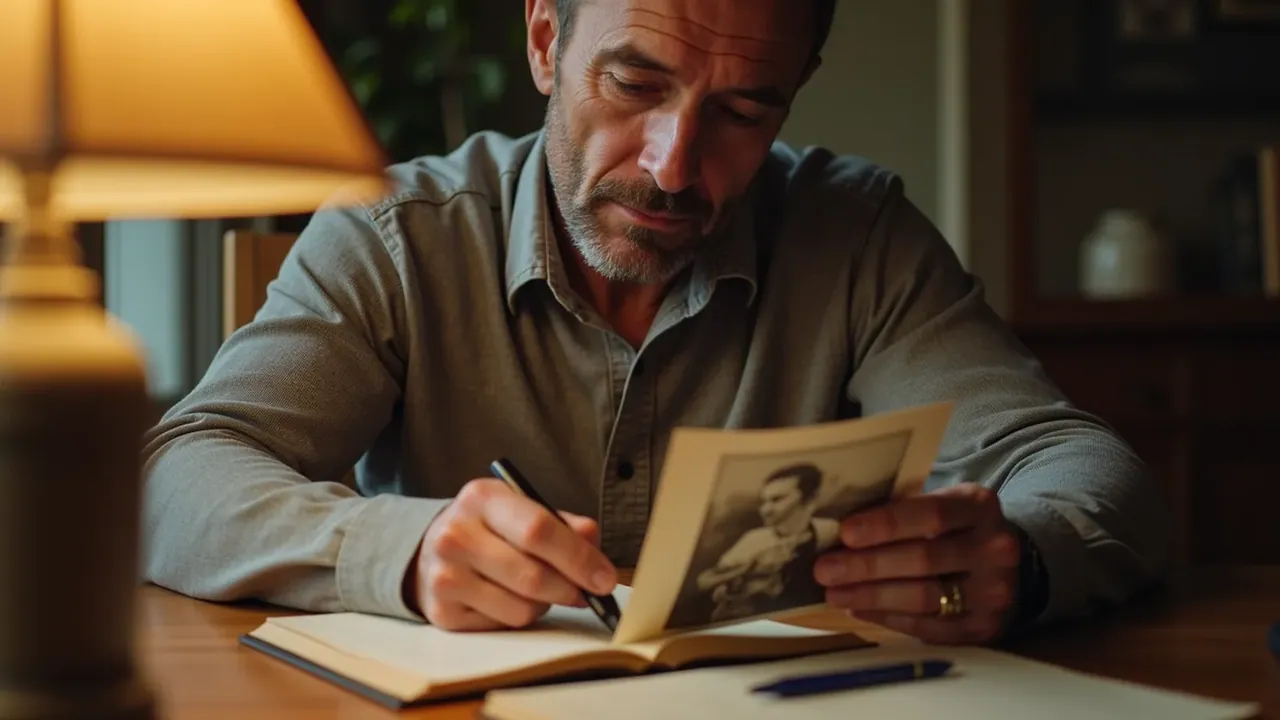
An old family photo can reopen the whole case. You can close it properly, once, without pretending there was nothing good.
Video version: Should we have tried harder? Answering it once
Coming soon. Everything in the video is in the written guide below.
Divorce regret usually arrives as one question on repeat: should we have tried harder, one more round of counselling? You can answer it properly, once. Write down the full film of the marriage, not the highlights. List what was tried and what happened. Then decide what the honest answer is, and what lesson, if any, you keep.
"I keep asking myself whether we should have tried harder, one more round of counselling."
It comes back with an old family photo on your phone, or when you see another couple at the school gate who "made it work".
You've answered the question honestly, once, on paper, and you can put it down. When it comes back, you have your own answer to read instead of starting the whole case again.
Why the question keeps coming back
Part of it is how memory works. After a loss, the mind tends to replay the best moments: the wedding, the first baby, the holiday where everything was easy. This is often called euphoric recall; researchers use the term rosy retrospection for the same pull towards remembering the past as better than it was. The hard years, the cold evenings and the arguments fade from the reel.
So you're comparing your life now, on a bad night, with an edited highlights version of the marriage. Of course the past wins that comparison.
The other part is that the question feels responsible. Asking "did we give up too soon" feels like taking the marriage seriously. But asking it every week isn't the same as answering it. Without an answer, it just keeps the wound open.
The pillar guide on how to get closure after a breakup has a short section on this question. This post gives it a full evening.
The full-film exercise for divorce regret
Set aside 90 minutes on an evening without the children. Bring a notebook, not a laptop. No alcohol.
- List the main chapters of the marriage, year by year, with one line each.
- Mark the good chapters and the hard ones honestly, including how long the hard ones lasted.
- Write down everything that was tried to fix it: talks, counselling, changes, time apart.
- Note what happened after each attempt, and whether both of you wanted to continue.
- Answer the question in one paragraph: would one more round have changed the outcome, and why?
- Write one lesson you'll keep, then close the notebook and put it somewhere out of sight.
Seeing the full film
The second step is where most men are surprised. When you write the hard chapters down, with their real length, the picture shifts. "We were unhappy for a bit" becomes "We were barely speaking for most of 2022 and 2023." The highlights are still there. They're just no longer the whole story.
The one-paragraph answer
You're not writing a legal judgement. You're writing what you honestly believe, given everything on the page. It might be: "We tried counselling twice, and the same issues came back within months. She'd already decided by the time we started the second round. More time wouldn't have changed it." It might also be: "We could have tried earlier, and I'll take that lesson forward." Both are answers.
What to read when the doubt returns
The question will still visit sometimes. When it does, don't reopen the case. Read your own conclusion. Keep a short version on your phone.
"I've looked at the whole marriage, not just the good bits.
We tried [what was tried]. Afterwards, [what happened].
My honest answer: [your one-line conclusion].
The lesson I'm keeping: [your lesson].
I don't need to answer this again tonight."
Chris and the beach photo
Chris, 45, kept seeing a beach photo from 2016 in his phone's "memories" and spiralling into "we should have done one more year of counselling". He did the full-film exercise on a Thursday night. Writing the chapters, he counted nearly four years of what he called "flatmates with kids", two rounds of counselling and a summer apart. His answer: "We tried more than once. The problems came back each time. She'd decided." His lesson: "Raise things in year one, not year eight." He turned off the memories feature that weekend.
Mistakes that keep the regret looping
- Reviewing only the highlights. Old photos and anniversaries show the best version. Fix: write the hard chapters with their real length.
- Answering it every night. Repetition isn't reflection. Fix: answer once, properly, then read your answer.
- Making it all your fault. Regret can tip into self-blame. Fix: note what both of you did and didn't want; see feel like a failure after divorce for the honest ledger.
- Sending a 2 a.m. message. A lonely moment isn't a decision. Fix: no messages about the relationship after 9 p.m., and talk to a friend first.
- Comparing with other couples. You only see their front door. Fix: compare your marriage to its own full film, not to someone else's highlights.
When regret is pointing at something real
Occasionally the exercise shows something different: that both of you might genuinely want to try again. That's rare after a divorce, but it happens. If so, don't act on it alone in a message. Talk to a counsellor first, and if it's mutual, a couples counsellor is the right setting. This site never offers tactics to win someone back; a real reconciliation is a shared decision, not a campaign. If the marriage involved threats, control or violence, or you were afraid of her, couples counselling isn't the right setting: talk to a counsellor on your own, and in the US the National Domestic Violence Hotline (call 1-800-799-7233 or text START to 88788; in the UK, the National Domestic Abuse Helpline on 0808 2000 247 or the Men's Advice Line on 0808 801 0327) supports men too.
More often, regret is pointing at the future. Missing the marriage often means missing being part of something: a team, a shared life, someone to tell about your day. Those needs are real, and you can meet them in new ways, which who am I after divorce explores. The free Survival Kit includes a short nightly release for the evenings the replays are loudest.
If regret becomes constant, or you feel hopeless about the future, please talk to your GP or a counsellor. If you have thoughts of harming yourself, call or text 988 in the US (or Samaritans on 116 123 in the UK and Ireland), or contact your local crisis line straight away.
- You've written the full film, including the hard chapters.
- You have a one-paragraph answer and a single lesson.
- When the question returns, you read your answer instead of starting again.
- Old photos no longer send you into an evening of replays.
- If you can't reach an answer, take the notebook to a counsellor; that's a good use of a session.
Key takeaways
- Divorce regret feeds on highlights; the full film gives the real picture.
- Write what was tried and what happened afterwards.
- Answer the question once, in a paragraph, and keep one lesson.
- Read your answer when doubt returns; don't reopen the case.
- If reconciliation feels real, talk to a counsellor before anyone else.
Questions people ask
Is it normal to regret getting divorced?
It is very common to have moments of regret, especially in the first year, around family occasions, or when life alone is hard. Regret often reflects grief for the good parts of the marriage and fear of the future rather than a clear sign the decision was wrong. Looking at the whole picture, not just the best memories, helps you tell the difference.
How do I know if we gave up on our marriage too soon?
Write down what was actually tried, for how long, and what changed. Note whether both of you wanted to keep working on it, and what happened the last times you tried. If one person had already decided, or the same problems returned after real effort, more time may not have changed the outcome. A counsellor can help you look at this calmly.
What is euphoric recall after divorce?
Euphoric recall is the tendency to remember past experiences as better than they were, keeping the high points and dropping the hard ones. After a divorce it can make the marriage look much happier in memory than it felt at the time, which feeds regret. Deliberately recalling the difficult periods alongside the good ones gives a more accurate picture.
Should I tell my ex I regret the divorce?
Think carefully first, and talk it through with a counsellor or trusted friend before saying anything. Regret in a lonely moment is different from a settled wish to reconcile. If you share children, an unexpected emotional message can unsettle co-parenting. If, after reflection, you both genuinely want to explore it, a couples counsellor is the right setting for that conversation.
Not therapy, and no promised results
BreakupRecovery is educational self-help, not therapy, counselling or medical care, and it does not promise any particular result or timeline. Recovery looks different for everyone. Examples are illustrative composites, not real clients. If you feel hopeless or have any thoughts of harming yourself, call or text 988 (the US Suicide and Crisis Lifeline); in the UK and Ireland, call Samaritans on 116 123, or contact your local crisis line or emergency services right away. Read the full disclaimer.

Free survival kit
Quiet the replays this week
In 30 minutes you finish with a phone that stops ambushing you, a 20-minute drill for every urge, calm replies ready if she gets in touch and a simple plan for your next seven days.